Clothing Store Inventory: Helpful Tips
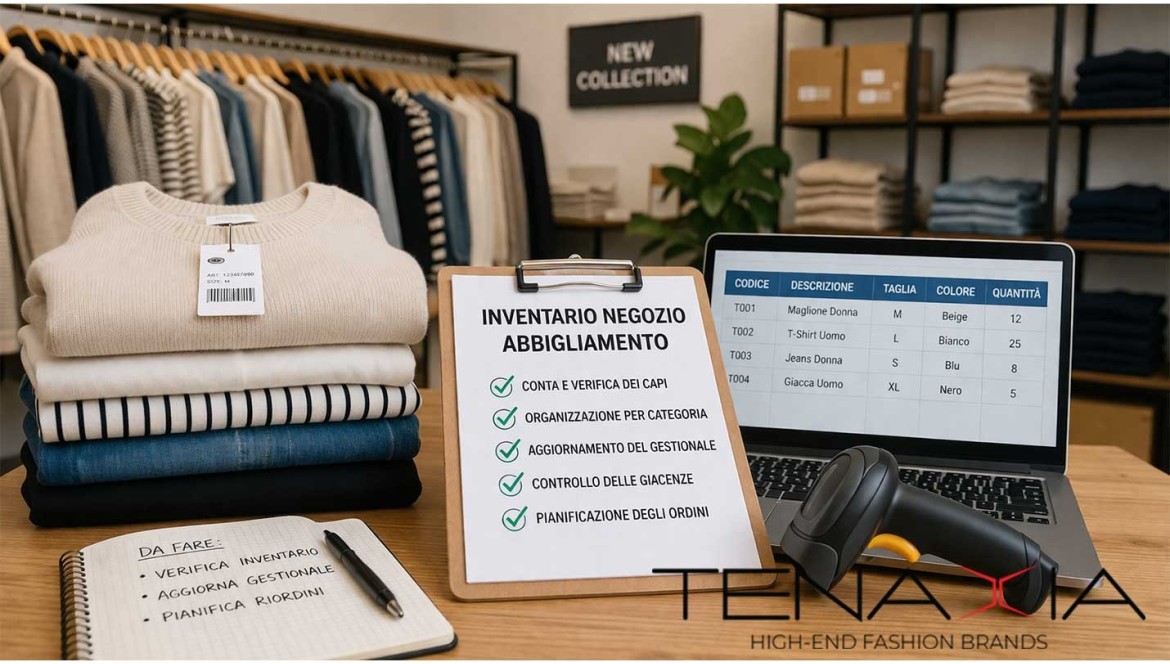
Managing a fashion store means dealing daily with new collections, current trends, sales, returns, and demanding customer requests. However, there's another activity, often postponed or considered secondary, which is actually the beating heart of the business: clothing store inventory.
Many owners consider it a tedious tax obligation that wastes precious time. Nothing could be more wrong: a store's inventory is the compass that shows exactly where the money goes, what the profit is, and what the real value of the business is. In this article, we'll see how to use inventory effectively to increase profits and reduce waste.
What is inventory and why is it essential in fashion
Inventory isn't just a cold list of numbers on a sheet of paper; it's an accurate snapshot of the capital invested in merchandise. In the fashion industry, this concept is even more critical because clothing has a very short shelf life. A garment that's trendy today could already be out of fashion in three months and therefore unsellable.
Taking inventory means monitoring the quantity, sizes, colors, and condition of every single item in the store. This operation is essential for at least three reasons:
- "financial health": inventory is tied up in cash, just as unsold items represent additional costs;
- customer satisfaction: knowing in real time if a specific size is available (and ordering it immediately if it's out of stock) prevents lost sales;
- planning: without accurate historical data, future purchases will be based solely on intuition, increasing the risk of costly errors.
Inventory methods and inventory management criteria
There are different ways to count merchandise, and the choice depends on the size of the store and the technology available. The most traditional method is the periodic physical inventory, which is usually done once or twice a year (often at the end of the fiscal year) and requires temporarily closing the store or working all night to count everything at once.
The most modern and effective method, however, is the perpetual inventory, which updates inventory in real time every time a sale or return occurs. It requires management software, but it allows you to always have the situation under control.
Then there is the rotation inventory, and in this case, instead of counting the merchandise in the clothing warehouse at once, a small portion is counted each day or week (for example, pants on Monday, shirts on Tuesday, etc.). This method is less labor intensive and allows you to correct errors as they arise, maintaining data accuracy year-round without having to stop business operations.
How to Organize and Control Inventory Effectively
When starting to take inventory, it's best to divide the store into zones, so you can work in a sector-specific manner and reduce the risk of errors or oversights. The operation should always be done in pairs: one person counts and calls the number, while the other records the data. This double check significantly reduces human error.
It would also be advisable to establish a standard procedure for defective and unlabeled items, which should not be mixed with saleable merchandise during the count, but set aside for separate management.
To ensure effective control, there should be no movement of merchandise during the inventory, meaning no new packages arrive and no sales. If the store is to remain open, the area where the counting is being done must be "frozen" and inaccessible to the public.
Product Categorization and Inventory Rotation
Properly organizing products is the secret to an efficient and proactive warehouse. In clothing, however, it's not enough to simply divide items into "pants" or "shirts," but you need to keep a close eye on variations such as sizes and colors. Once the categories have been created, it's necessary to observe the speed at which the merchandise leaves the store.
To simplify this process, called rotation, you can mentally divide the items into three groups. The first contains the best sellers, those that should never be out of stock because they sell quickly and guarantee excellent profits. The second contains the stable merchandise, which sells with a certain regularity. The third category includes so-called "lazy" items, which remain on the shelves for months, risking becoming unsold.
By observing the rotation of items, it becomes easier to understand what to reorder immediately to avoid losing sales and what to put on sale to free up space.
Prevent losses, overstocks, and stock-outs
The inventory serves primarily to highlight the so-called inventory difference, that is, the difference between what the computer tells a store it should have and what is actually on the shelves. This difference can be due to various reasons, such as theft, administrative errors, or damage. Identifying these losses allows you to take countermeasures, such as installing better anti-theft systems or better training staff.
Equally dangerous are overstocks and stock-outs. Surpluses represent money wasted on goods that no one buys, while out-of-stocks result in lost sales and frustrated customers.
To prevent these problems, analyzing historical data is crucial. When purchasing goods from your wholesale clothing supplier, you shouldn't rely solely on personal taste or current trends. Instead, it's a good idea to look at your previous inventory data and ask yourself specific questions: What sizes were left over last year? Which colors sold out in two weeks? Buying based on concrete data reduces the risk of having a warehouse full of unsold goods at the end of the season.
Operational tools: spreadsheets, barcodes, and software
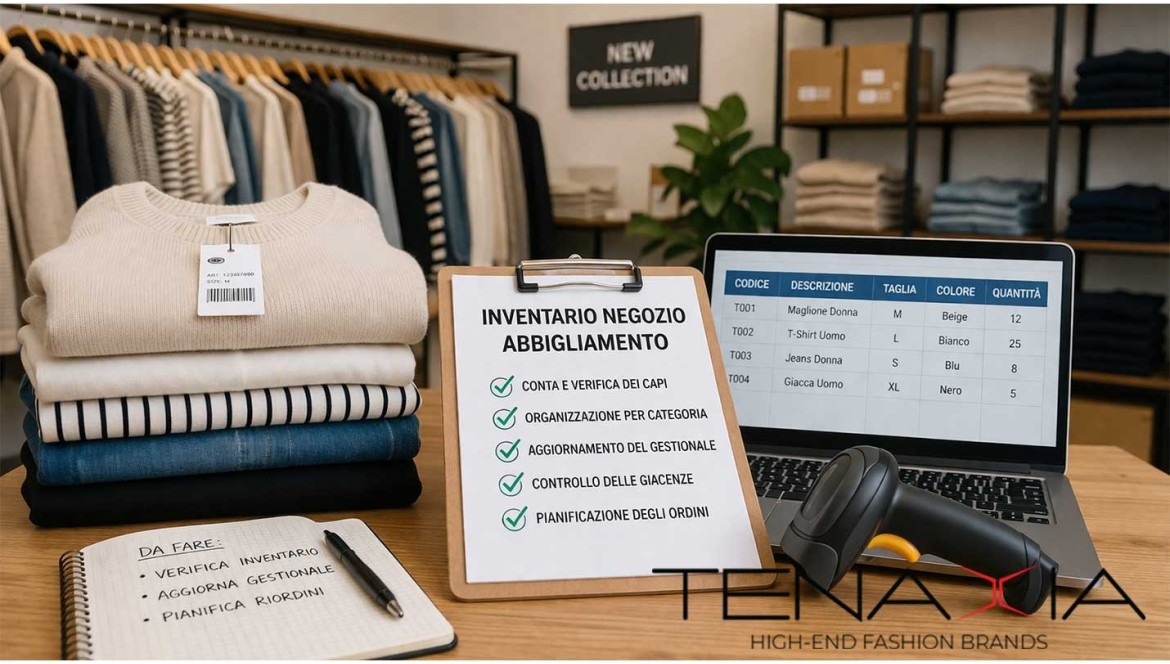
Finally, there are the operational tools, which should be chosen based on a series of factors. For very small shops, the temptation is to simply use pen and paper or simple spreadsheets like Excel. However, one incorrect formula or incorrect typing can distort the entire balance sheet.
A good solution, however, is barcodes. Labeling each item with a barcode significantly speeds up cash register and inventory operations.
Even more efficient is the use of management software with integrated warehouse management. These programs directly connect the store to the warehouse, and when a product is sold, the system automatically deducts it from stock.
Manual management is now obsolete, and the best option is to switch to digital management, the first step in transforming a small shop into a business ready for growth.