How to Organize a Clothing Store Warehouse
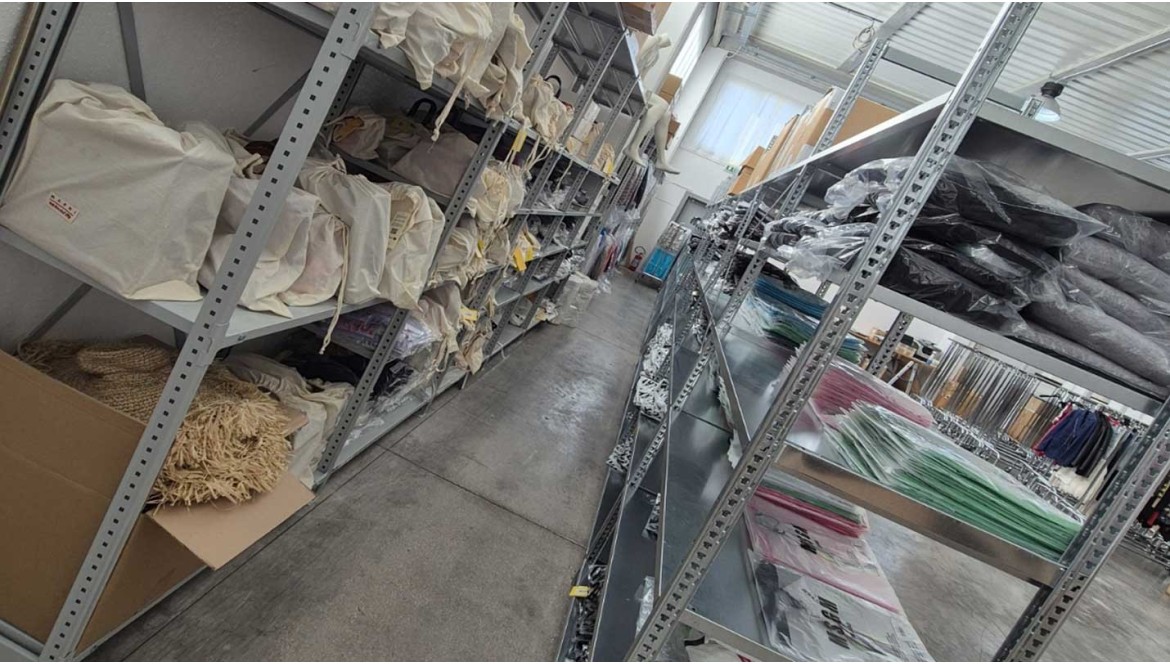
A well-organized warehouse is the starting point for an efficient clothing store. Managing a warehouse means building a precise system, capable of indicating at any time what is available, where it is, and when it needs to be replenished. If done effectively, it is possible to streamline daily operations, accelerate sales, and limit the risk of stagnant inventory. Taking care of the warehouse structure allows you to simplify processes, limit waste, and keep inventory and rotations under control. What makes the difference is the method adopted, much more than the size of the available space.
Plan your purchases and reduce excess inventory
A warehouse truly works when it reflects a balance between availability and demand. Planning your purchases thoughtfully means avoiding overloads of merchandise, but also ensuring a continuous supply of the most popular items. To do this, you need an approach based on observing sales data, understanding seasonal rotations, and the ability to anticipate purchasing behavior. Instead of ordering large quantities "just in case," it's more useful to think about frequent micro-reorders, calibrated to the actual flow of the store. This model, often referred to as just in time, helps prevent items from sitting idle for months, taking up space and tying up capital.
Reducing excess inventory also allows you to communicate better with customers: a carefully curated selection, renewed more frequently, conveys attention and constant updating. Furthermore, a controlled quantity of garments makes it easier to manage space and speed up all logistics activities, from reordering to inventory. To always have up-to-date stock, you can count on Tenaxia's wholesale clothing.
Register and code each item systematically
Beyond simple cataloging, it is useful to adopt a structured identification logic that allows you to associate not only a code with each item, but also key attributes such as season, collection, price range, and sales performance. This approach transforms the warehouse into a valuable source of operational data.
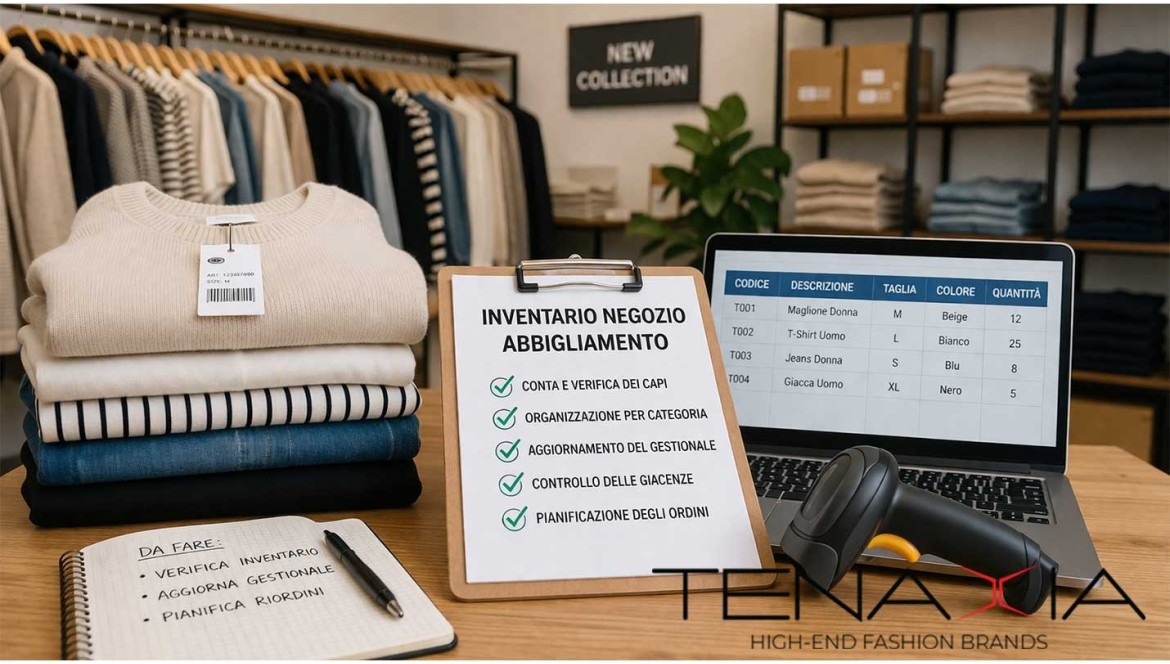
A system based on barcodes or QR codes can significantly simplify daily operations, from receiving goods to restocking. Each item becomes easily traceable, and every movement is tracked in real time, with drastically reduced margins of error. When connected to a modern management system, tracking can provide an instant overview of what's in, out, or sitting in stock.
This level of control not only saves time, but also allows you to make more informed decisions. For example, you can identify in just a few clicks which sizes or styles are in high rotation, which products are about to sell out, or which remain unsold.
Classify inventory according to functional criteria
The product subdivision, if well-designed, simplifies daily activities and drastically reduces search times. But rather than limiting yourself to rigid categories like gender or size, you can introduce more dynamic logic, for example based on turnover rate, profitability, or intended use (ceremony, leisure, work).
This approach allows you to create visual and functional paths within the warehouse, where each sector responds to a specific commercial function. One area can house the season's best sellers, another the sale items, and yet another the slow-moving items that need to be monitored more closely.
Cross-referencing criteria—for example, model + color + performance—allows you to build a flexible system, upgradable over time, and adapt to the store's changing needs.
Classification, if well-designed, becomes an ever-updated map of the stock: it improves work speed, reduces errors, supports store layout, and provides valuable insights for restocking and planning future collections.
Optimize space: physical and logical solutions
In a clothing store, where items can vary in volume, seasonality, and rotation frequency, the physical layout must follow an operational logic and not just an aesthetic one.
A useful first step is to map the Areas according to their intended use: areas for new arrivals, areas for rapid replenishment, and sectors for long-stocked items. Added to this is the strategic use of height: modular shelving and stackable containers also allow for the exploitation of vertical volumes, leaving corridors free.
Furthermore, providing mobile or reconfigurable areas allows you to adapt the warehouse structure to seasonal peaks, reducing space during quieter periods and making top-of-the-line products more accessible during peak seasons.
The goal is to transform the available space into a fluid and adaptable environment, where every square meter contributes to efficiency.
Establish minimum and maximum inventory thresholds
Defining the minimum quantity for each item helps you avoid stockouts, especially during peak periods or seasonal promotions. At the same time, setting a maximum limit prevents the accumulation of merchandise that risks remaining unsold, tying up space and capital.
This system is particularly useful when integrated with actual sales data. By analyzing the speed at which a specific item leaves the warehouse, you can precisely calibrate the reorder point, avoiding both shortages and excesses.
Furthermore, working with well-defined thresholds facilitates order planning, making communication with suppliers more efficient. When the system signals that a specific product has reached the minimum threshold, replenishment can be activated automatically or with a simple check.